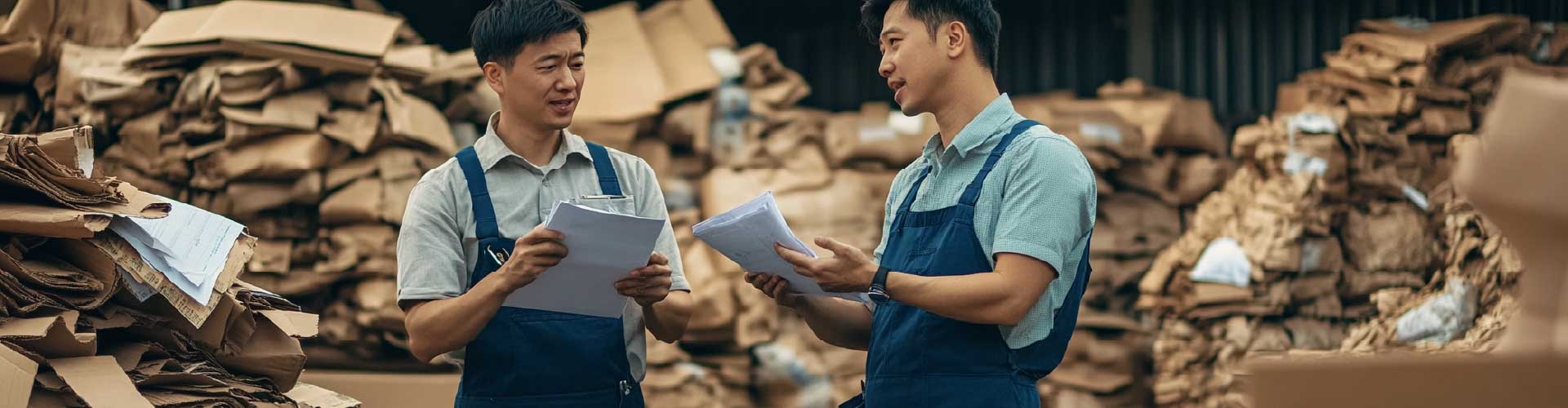
As of 2026, the competition between paper-based and plastic packaging has evolved far beyond a simple comparison of cost and function. It represents a profound choice concerning sustainable development, corporate social responsibility, and long-term brand value. As a large-scale corrugated carton factory with over four decades of industry experience, Double Paper Products understands the nature of both materials and firmly believes that eco-friendly paper packaging represents the indisputable future.
I. The Imperative of Environmental Responsibility: Circularity vs. Persistent Pollution
Plastic packaging once dominated the globe due to its low cost and excellent durability, but its environmental toll has become increasingly apparent. Even in regions with relatively advanced recycling systems, the overall recycling rate for plastic packaging remains low. Vast amounts of plastic waste ultimately end up in landfills or the natural environment, causing pollution that persists for centuries. In contrast, paper-based packaging, represented by corrugated boxes and custom paper packaging, has renewable wood fiber as its core material and can achieve efficient recycling within proper systems. Leading global consumer markets and multinational corporations have long made increasing the proportion of renewable materials in their packaging a core ESG (Environmental, Social, and Governance) goal. Choosing paper packaging is not only about complying with increasingly stringent global environmental regulations (such as the EU's plastic tax or various plastic restriction laws) but also a wise decision to proactively assume environmental responsibility and shape a green brand image.
II. Performance Breakthroughs and Scenario-Based Applications: Paper is Not "Fragile"
It is true that traditional paper packaging faced challenges in scenarios requiring waterproofing, moisture resistance, or extreme strength. However, modern paper packaging technology has achieved transformative breakthroughs. Through special coatings, composite processes, and structural innovation, today's food-grade paper food boxes and pizza takeaway paper boxes can excellently handle grease and condensation. Durable corrugated cartons for shipping, specially designed for cold chains, possess excellent moisture resistance and compression strength. This means that from courier paper boxes for e-commerce logistics to custom color boxes for gifts for premium products, paper packaging can provide reliable and customized solutions. Technological advancements are continuously expanding the application boundaries of paper packaging, enabling it to meet more complex and demanding requirements.
III. Full Lifecycle Value: Hidden Costs and Tangible Benefits
While some plastic packaging may still hold an advantage in terms of initial purchase cost, paper packaging offers higher comprehensive value when assessed over its full lifecycle. Firstly, its excellent recyclability reduces corporate waste disposal costs and environmental compliance risks. Secondly, especially for consumer-facing brands, using biodegradable paper food boxes or eco-friendly paper food boxes produced by a green paper packaging factory is in itself a powerful brand communication tool. It can directly enhance brand affinity, attract sustainability-conscious consumers, and generate immeasurable marketing value and brand premium. Finally, with the maturation of carbon trading markets and the implementation of "Extended Producer Responsibility" systems, using low-carbon footprint paper packaging will become a direct financial advantage for businesses.
IV. The Industry's Future: The Era of Paper Packaging Driven by Innovation
The innovation potential for plastic packaging on the path to sustainability is becoming increasingly limited due to its material properties. In contrast, the paper packaging industry is entering a golden age driven by innovation. From developing new materials using recycled fibers and agricultural residues, to integrating digital printing for small-batch, personalized custom paper packaging, and optimizing structural design to reduce raw material usage (such as lightweight e-commerce corrugated cartons), the entire industry is vibrant. As a key link in the supply chain, paper packaging wholesale factories like ours are continuously providing customers with solutions like wholesale corrugated cartons that are stronger, more environmentally friendly, and cost-effective through technological and process innovation.
The conclusion is clear: while plastic packaging may not disappear overnight, the irreversible industry trend is the replacement of its market share by more sustainable paper packaging. Choosing paper packaging means choosing to walk hand-in-hand with the future.